

Aftershocks Complicate Recovery Following Venezuela Earthquakes
Aftershocks continue to disrupt rescue efforts in northern Venezuela following two catastrophic back-to-back earthquakes on June 24th, 2026. The magnitude 7.2 and 7.5 quakes have left thousands dead, with tens of thousands still reported missing.
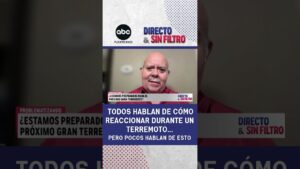
Speaking on the T&T Today Morning Show, Venezuelan national Ignacio Ruben Smith Salazar indicated that the persistent aftershocks are forcing emergency crews to pause operations frequently, raising concerns about the safety of both survivors and rescuers.
“The government and the international community are currently helping on the rescue and salvage operations, but it hasn’t been easy due to the aftershocks that we’ve had over the last week. We’re looking at about 350-plus aftershocks ranging from 2.5 to 4.5. That has made things a little bit more complicated.”
Citing NASA satellite assessments that approximately 59,000 buildings have been damaged or destroyed across northern Venezuela, Mr Smith Salazar emphasised that reconstruction costs are likely to run into the billions.
“The main concern right now is how to rebuild a country where you had a hundred billion dollars to reconstruct the oil industry, now we are probably looking at about 150 to 200 billion to rebuild the country.”
He outlined the challenges facing the population, particularly the psychological toll.
“When you relive the events, you just basically start crying, and a lot of people are probably going to live with Post-Traumatic Stress Disorder (PTSD). I know, for example, some of the members of my community, that every time we get an aftershock, they start crying, they get all worked up. Not only the destruction, the physical destruction as such, but also the psychological effects that this event has had on a good part of the population, especially those in La Guaira and Caracas.”
He explained that senior citizens have been particularly hard hit, with many facing increased vulnerability due to limited mobility, health challenges and disrupted access to essential services.
“Approximately 35% of Venezuela’s population are senior citizens, so here you have this group that is very affected and probably have become homeless. I think that is the biggest concern right now. I can tell you from my experience, my parents, who are over 90, they keep asking me when are we going to go back to the house.”
He added that uncertainty over structural damage has left many residents fearing displacement.
“From my experience, we don’t know if our building is going to be demolished because of the structural damage that it suffered. So right now everyone in the community is working really hard to see if we can save the building.”
The WHO has also raised concerns about the potential spread of disease, as healthcare systems remain disrupted in the aftermath of the disaster.