

Ghany: Crime, AI And Regional Security Stand Out In PM’s UNGA Address
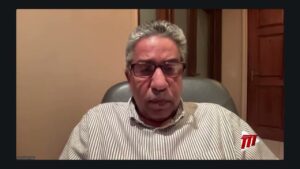
Political Scientist Professor Hamid Ghany says Prime Minister Kamla Persad-Bissessar’s emphasis on crime, regional security and artificial intelligence were among the key features of her address at the 81st United Nations General Assembly.
Speaking to TTT News shortly after the address on Tuesday, he noted that crime featured prominently early in the Prime Minister’s speech, continuing a theme from her address to the UN last year.
He said the emphasis on crime was significant, particularly in the context of the domestic situation.
« She emphasised the issue of crime, which I thought was an important thing, given what is happening locally, the issue of crime and some of the initiatives that she’s taking. When compared to her speech last year, she emphasised crime last year as well. So that’s a common theme that’s running through both of the speeches. And I think because it came so early in her speech gives us the sense of how important that issue is. And when we relate it back to the domestic environment, we can recognise that clearly this is something upon which she places great import. »
Professor Ghany said the Prime Minister’s focus on the illicit flow of narcotics and weapons reflected the severity of the problem facing Trinidad and Tobago.
He said the issue should be viewed beyond political debate over States of Emergency, pointing instead to what he described as the depth and spread of criminality.
“It’s rather the depth of criminality in society and how far it has gone and how far it has spread. And it is one of the core areas. And it is fuelled to a large extent by the drug trade and the trade in human trafficking and other things associated with it. And we cannot turn a blind eye to it. It has to be taken head-on. And I think, you know, she’s right now in the eye of that particular storm and has taken a firm stand based on the statement she made yesterday, which is obviously drawing various responses in public media and social media. But it is lying at the core of what her government is going to stand for. And she is prepared to stand for it.”
Professor Ghany also welcomed the Prime Minister’s call for greater international attention to Haiti, saying the situation requires action beyond regional discussions. He said Trinidad and Tobago, through CARICOM, could play a role, but stressed that Haiti would require broader international assistance.
Turning to artificial intelligence, Professor Ghany said the Prime Minister’s discussion of AI and “superintelligence” showed a focus on emerging global challenges.
He noted that Trinidad and Tobago is already positioning itself within the developing AI environment, including through plans to establish data centres.
“That’s literally the topic of the day and that’s literally the future that we’re talking about. So I think that she was able to also project into the future, because Trinidad and Tobago, of course, is embracing the AI challenge and is moving in the direction of setting up some data centres locally. So we are in the eye of the AI environment and it’s certainly something that I recognise that she put emphasis on in her speech.”
Turning to Venezuela, Professor Ghany described the planned meeting between Prime Minister Persad-Bissessar and interim President Delcy Rodríguez on Wednesday as a significant diplomatic development surrounding the UN visit.
He said the meeting could create opportunities for greater cooperation between the two neighbouring countries, particularly in energy and other areas.
“I think in terms of the long history that we have had with Venezuela over the years, and what is over the horizon in terms of the future, in terms of the energy cooperation with Venezuela, some of the disaster relief that we’ve given to Venezuela recently, notwithstanding all of the tensions that took place. But there’s a different regime in power in Venezuela now, and I say different regime in the sense that Nicolas Maduro may not be there, and Delcy Rodriguez was part of the Maduro regime, but she’s operating in a different way to how Maduro was operating before. And I think that the situation is one now that the dialogue—we’ve gotten to the stage where there is a planned face-to-face meeting between the two—I think is an excellent diplomatic initiative and augurs well for the future.”