

Health Minister Highlights Progress In HIV Testing And Treatment
Health Minister Dr Lackram Bodoe says Trinidad and Tobago has made what he described as “remarkable progress” in HIV testing and treatment.
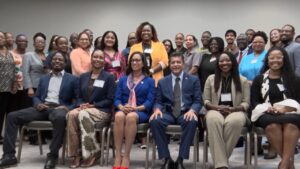
Speaking at the opening of a four-day HIV Surveillance Capacity-Building Workshop hosted by the United States’ Centers for Disease Control and Prevention (CDC) in Port of Spain on Monday, he said Trinidad and Tobago continues to make significant strides in addressing HIV, crediting the collaborative efforts of local organisations, the Ministry of Health and international partners.
« We are seeing some remarkable progress in these areas. Earlier this year UNAIDS highlighted the work of the Medical Research Foundation of Trinidad and Tobago, which works in partnership with the Ministry of Health and the CDC. As of September 2025, MRF, I’m told, had 5,202 persons receiving antiretroviral therapy, with 95% achieving viral suppression and 79% having an undetectable viral load. »
He added that UNAIDS reported a decline in treatment interruptions among MRF clients, from 446 cases in 2024 to 246 in 2025, indicating improved continuity of care for people receiving HIV treatment.
The Health Minister also highlighted the work being undertaken by his Ministry, noting that there are 75 HIV testing sites across the country.
« We have also expanded the options available to the population through HIV self-testing. This gives individuals another private and convenient avenue to learn their HIV status while ensuring that persons with a reactive self-test are directed towards confirmatory testing and appropriate care. Also worth highlighting is the work of the National HIV Help Line, 800-4HIV. »
Dr Bodoe also shared statistics from the Help Line, noting that the figures provide insight into the reach of support services.
« From October 2025 to date, I am told that the Help Line has supported the linkage of almost five hundred and fifty persons to care and facilitated some three thousand outreach engagements. And, of course, this demonstrates the importance and role it has played in connecting individuals and communities with HIV services that they need. »
Additionally, Dr Bodoe highlighted an ongoing partnership with the CDC and the University of California to implement the District Health Information Software II (DHIS2).
« What does this DHIS2 actually doing? It is helping us transition from paper-based HIV reporting to more timely electronic data capture, strengthening HIV testing data, case-based surveillance, programme monitoring and national reporting. Our next step would be to continue expanding this system across laboratory settings so that the Ministry can strengthen data capture at all points of HIV testing. »
The workshop will cover the roles and responsibilities of key stakeholders within the HIV surveillance system, while also exploring the legal and ethical frameworks that guide the collection, management and use of HIV-related data.